
| 006 | The Townhouse Garden Conundrum
If you've ever lived in a city or town, you've probably encountered the challenges that come with living so close to your neighbors. With so many gardens packed together, invasive plants that aren't being managed can easily escape into surrounding yards. Pest problems can spill over property lines, and mosquitoes breeding in neglected containers can make it difficult to enjoy your own outdoor space. No matter how much effort you put into your garden, you can be left feeling powerless because, at the end of the day, the only yard you truly control is your own.
Unfortunately for us, this wasn't a hypothetical. It was our reality.
Since writing my first letters, full of hope and overflowing with excitement about the potential of our little garden, I had slowly slipped into despair. Eventually, I all but gave up on the idea of creating a curated outdoor space that could support our lives.
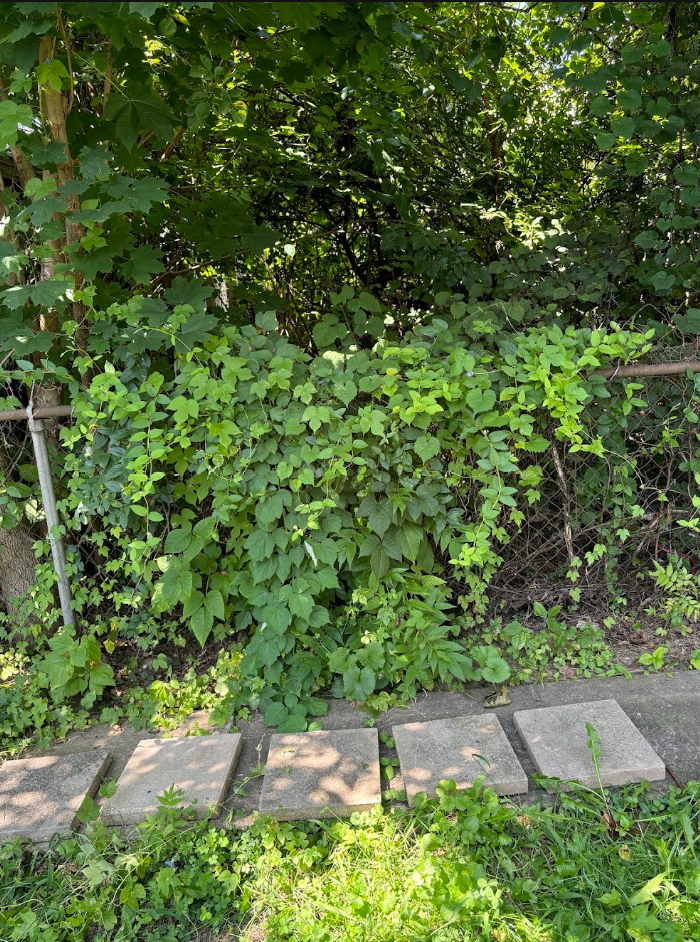
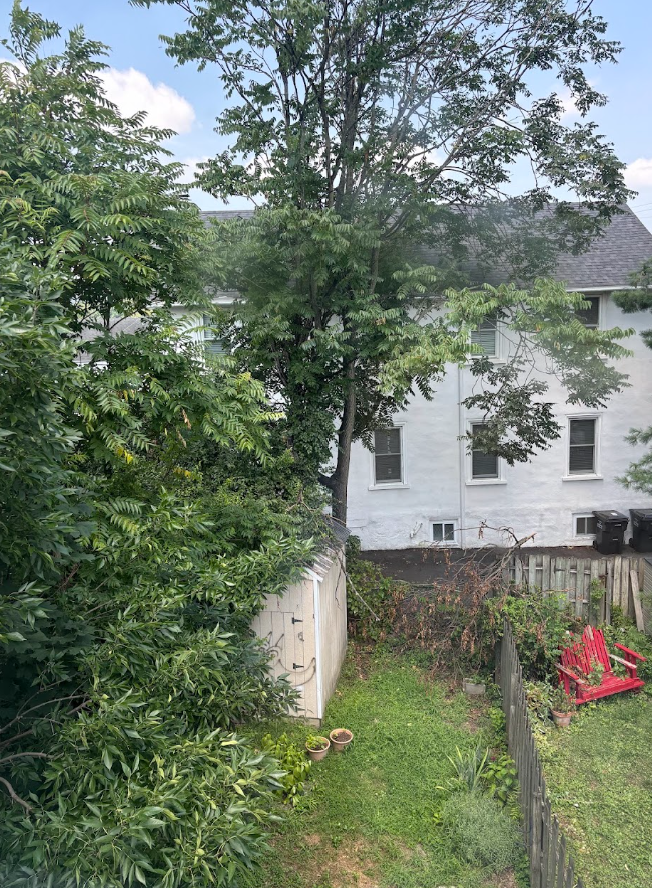
Ailanthus altissima (Tree of Heaven) and Acer platanoides (Norway Maples) had run rampant, casting shadows across half the yard and causing many of my plants to stretch desperately toward what little light remained. Invasive honeysuckle had swallowed the roof of my shed, far beyond my reach. Multiflora rose had woven itself through the chain-link fence. Trees pushed through the fence line while poison ivy crept around the perimeter.
The Ailanthus altissima brought with it an invasion of spotted lanternflies, whose honeydew coated nearby plants and created ideal conditions for sooty mold to spread across that entire side of the garden. I weeded repeatedly, removed as many pests as I could reach by hand, and hacked back branches that continually blocked the entrance to the yard. But I couldn't get ahead of it. I couldn't reach the overhanging branches or the largest concentrations of lanternflies hiding high in the invasive trees.
The final blow came when my prized clover lawn began to rapidly decline. I brought samples and photographs to the head of the Plant Health Care department at work, and she identified the culprit immediately: a severe spider mite infestation.
I gave up.
The garden that was supposed to bring peace and joy, and provide a canvas for my horticultural expression, had become a place of frustration and defeat. Instead of feeling inspired, I felt powerless, discouraged, and somehow inadequate in the very vocation I loved.
So I walked away.
I let the weeds take hold, the grass become a wild meadow, and the perennials simply fend for themselves.
Until...
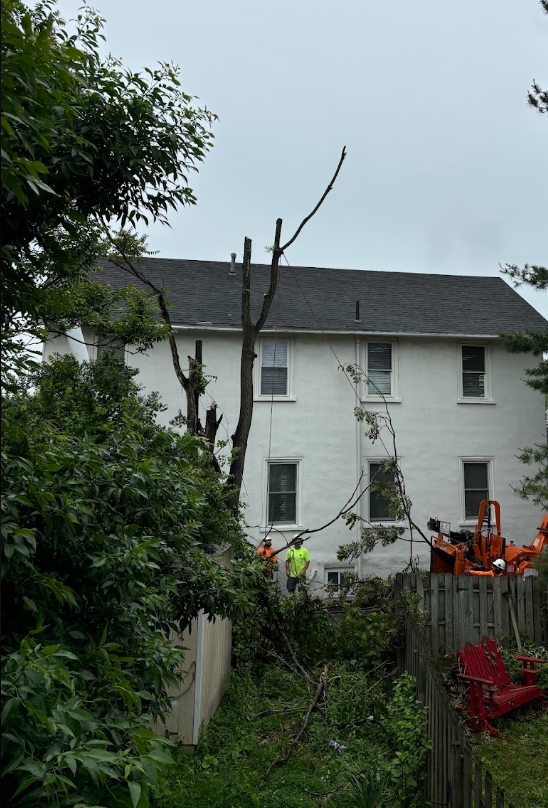
We had a large, partially dead ailanthus growing along the property line between our yard and the business behind us removed.
Finally, we saw the light.
Literally.
Although the tree hadn't cast a tremendous amount of shade over the yard itself, removing it allowed sunlight to reflect off the white building behind us and back into both the garden and our home. Suddenly, the shadow that had hung over the space, both physically and mentally, was gone.
I called my brother, who owns and operates his own landscaping company, and asked for help. I knew the project had become too overwhelming to tackle alone.
David was my hero.
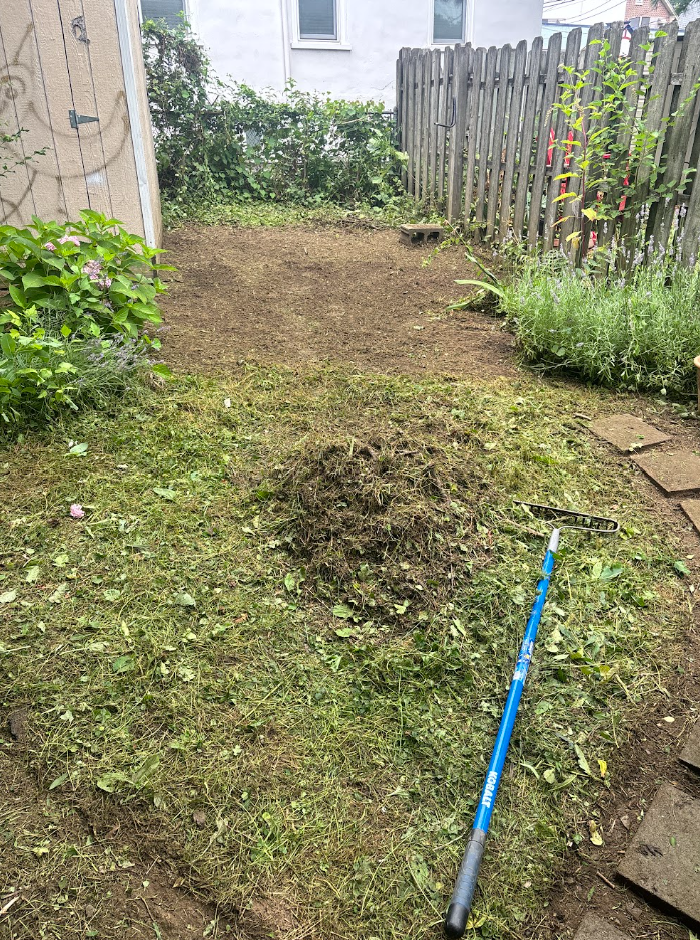
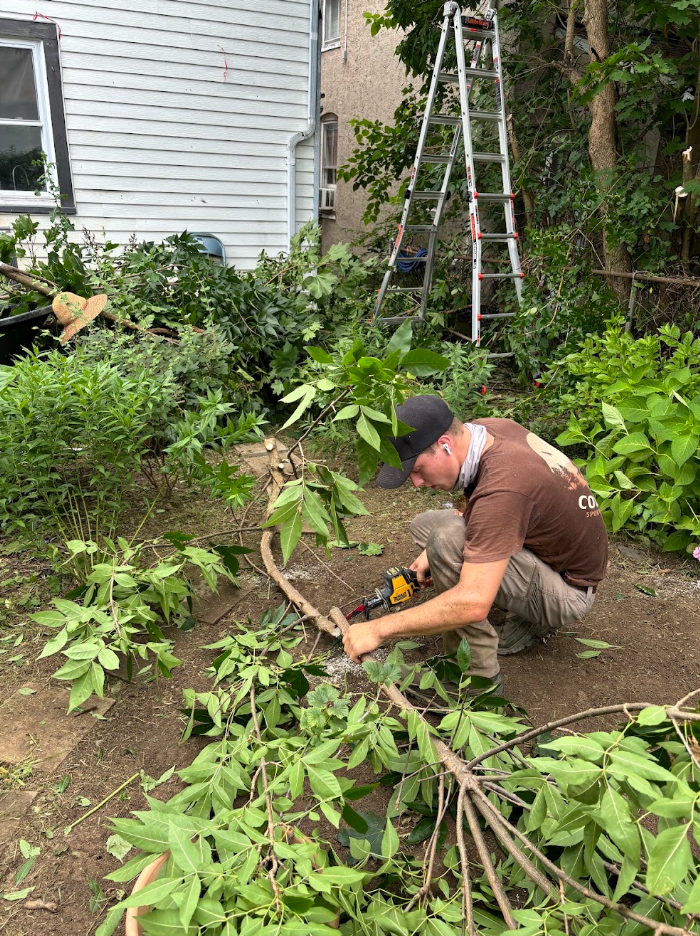
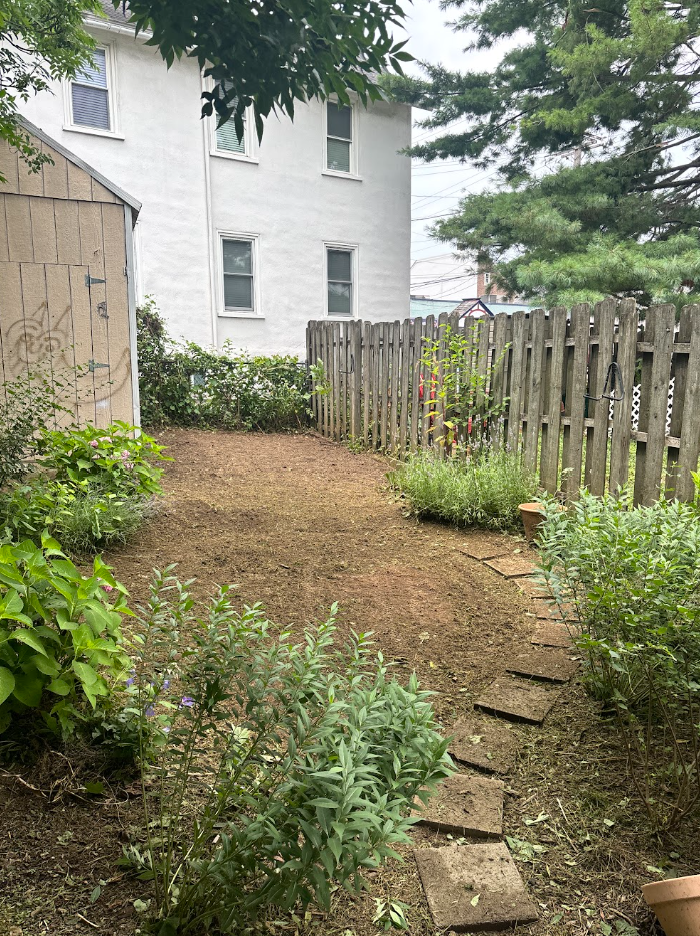
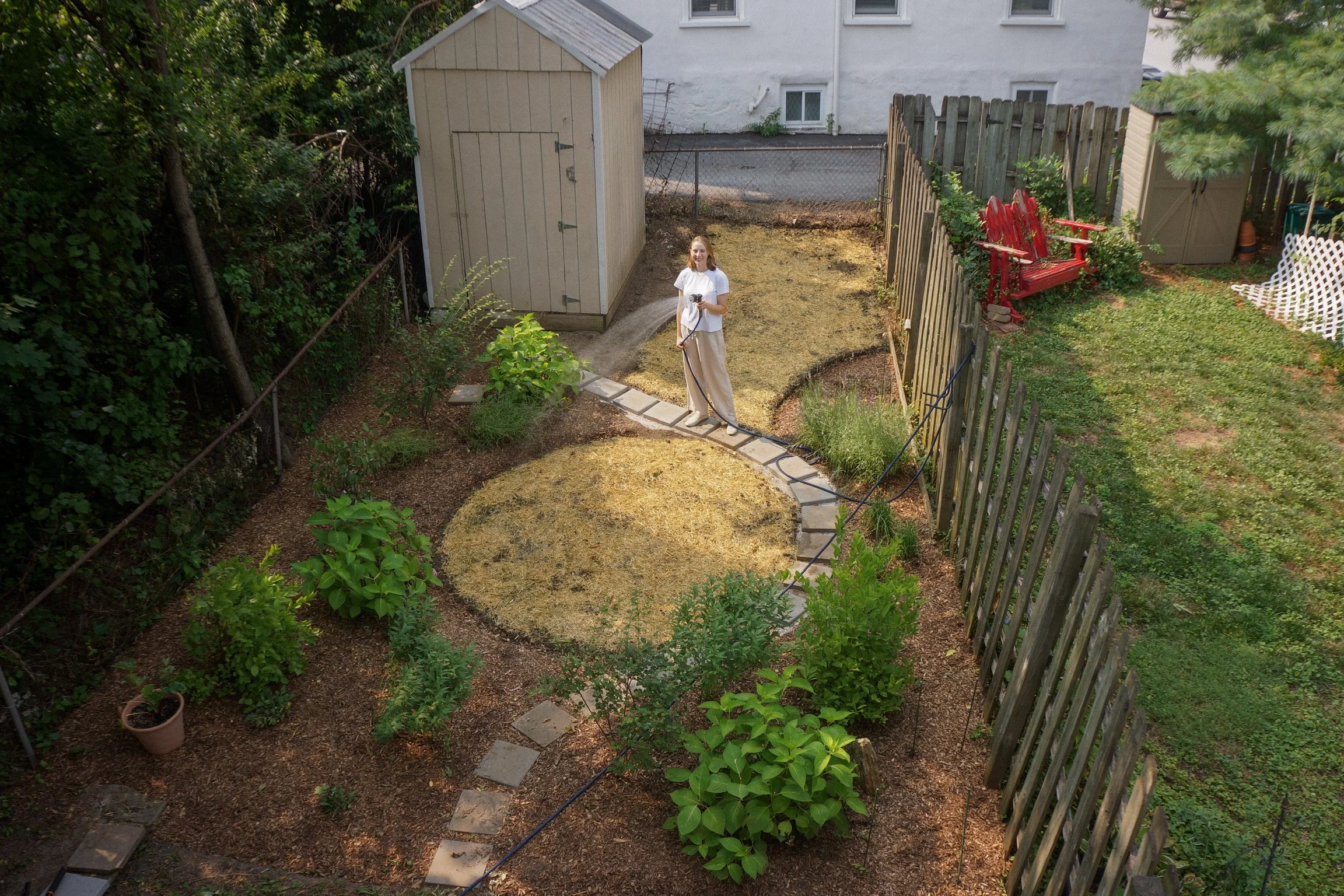
The first step was simply gaining access to the yard. He lopped off the branches blocking the gate before weed-whacking the clover and meadow of weeds down to the soil. From there, he used a small rototiller to turn everything under and create an even seedbed for new grass. He edged the planting beds, tamped clean borders, and together we weeded before spreading a thick layer of cedar mulch.
I like cedar mulch because it naturally deters many pests, resists decay better than most other mulches, and is slightly acidic, something I'm hoping will encourage my hydrangeas to bloom a little bluer.
Once the beds were finished, we finally completed the paver path to the shed, something I had started months earlier but never managed to finish. This time we did it properly, excavating several inches of soil, compacting the base, and installing a thick layer of leveling sand before laying the pavers.
Eventually I'd love to build a patio against the house, but there's only so much three people can accomplish before dark.
My friend Julia, who conveniently also works for a prestigious landscaping firm, spent hours helping us untangle and remove invasive vines from the fence lines. With their support and camaraderie, what would have been an overwhelming chore became an excuse to spend time with people I love, crack jokes, and laugh together.
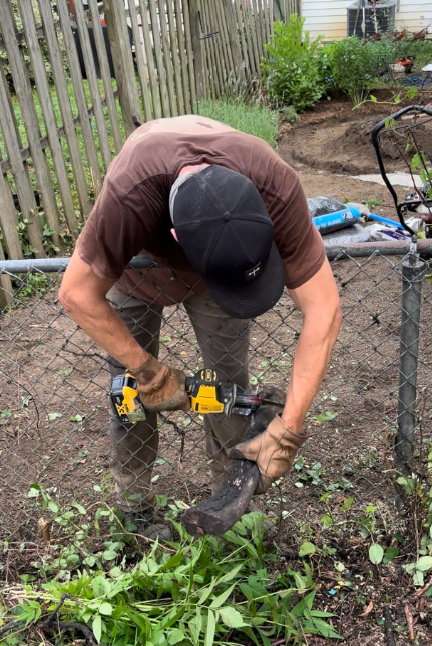
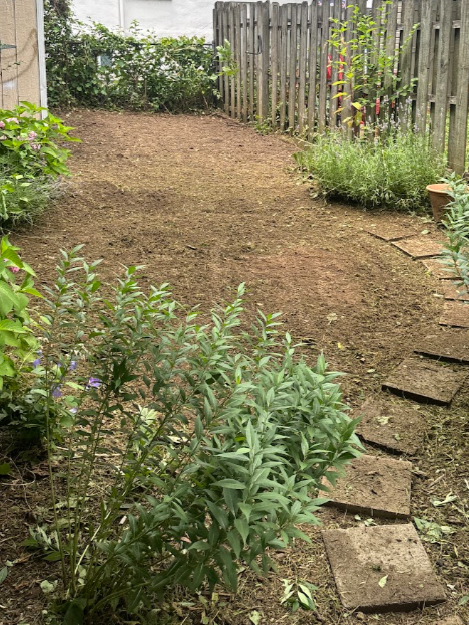
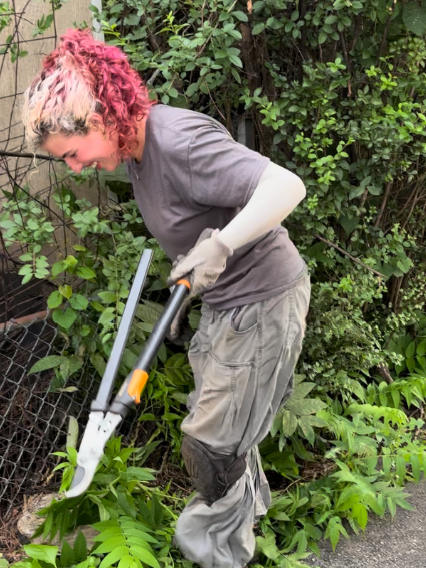
In just a day and a half, everything had changed.
The garden was restored.
More importantly, so was my hope.
Looking back, I've realized just how much I have to be grateful for. I have brothers who will go above and beyond whenever I can't carry something alone. I have incredible friends who show up ready spring into action, no matter the project. I have a community of people who can help identify a pest problem, lay pavers, pull invasive plants, or simply remind me that impossible situations are never truly impossible.
Perhaps gardens were never meant to be cultivated alone.
If you want to go fast, go alone. If you want to go far, go together.
Sincerely,
The Grower