
011 | From the Field: Walnut Leaf Dahlia Farm
Down a narrow lane between towering stands of corn lies a field bursting with accents of blushing pink, flaming oranges, cool purples, and pure whites.
Neatly lined, labeled, and loved lies this field of dahlias, tenderly cared for by Clyde and Eunice Peters.
The Peters have been growing these magnificent blooms for 40 years, learning all of the tips and tricks along the way. I loved talking to Clyde, learning about his favorite varieties, techniques to extend vase life, and some of the many challenges that he’s encountered over the years.
I visited Walnut Leaf Dahlia Farm one week before my cousin’s wedding, where I would be playing florist for the weekend. Having never arranged flowers for a wedding before, I wanted to get a sense of what would likely be ready in time and which varieties would hold up best in the arrangements. Clyde walked me through the field, pointing out what he expected to be blooming and steering me away from varieties that might cause trouble.
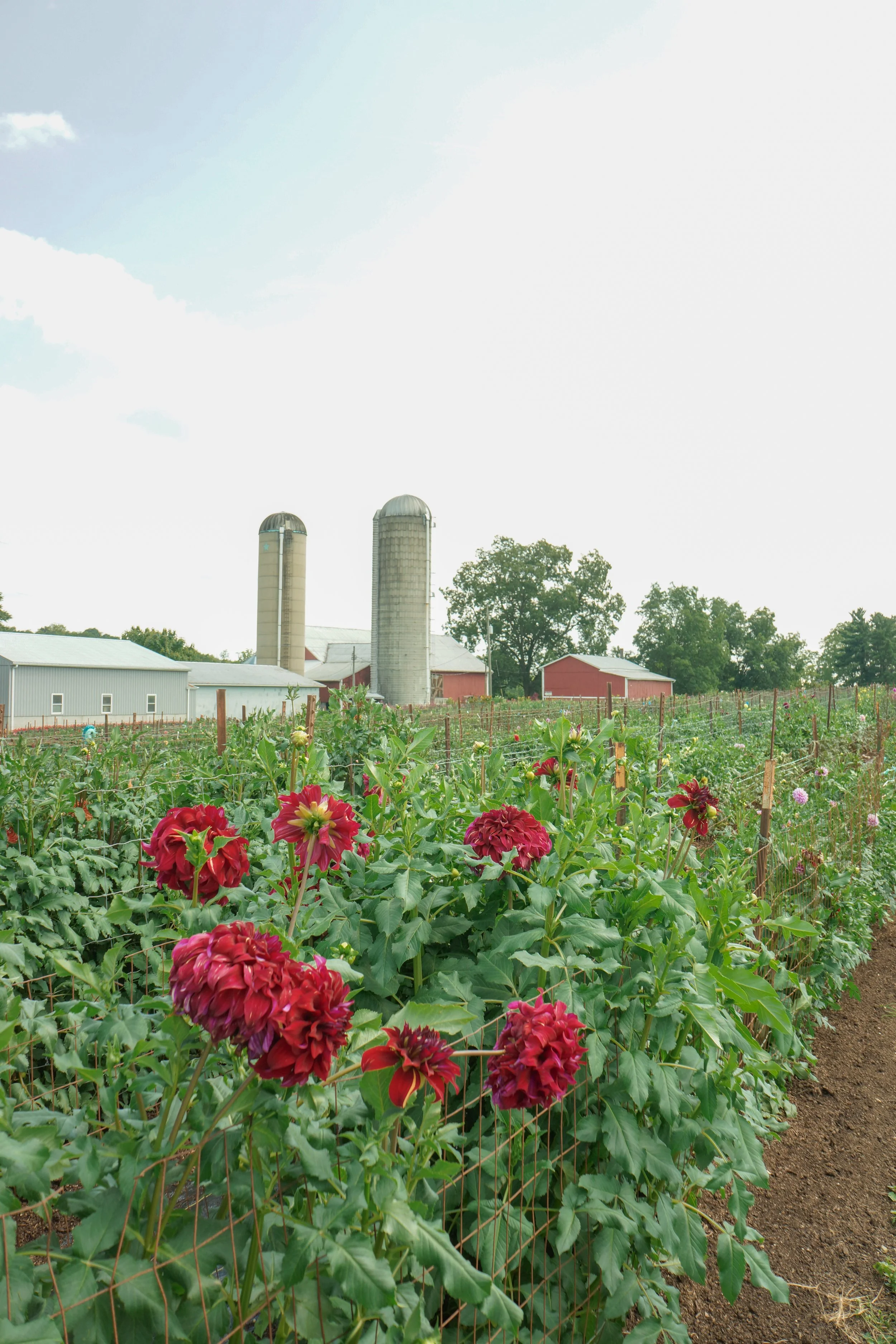
Colarettes, for example, tend to have a shorter vase life. He also explained that flowers need to be dry before going into the cooler, which can make harvesting after heavy rain particularly challenging, especially with the enormous dinner plate dahlias. With storms in the forecast that week, he helped me select flowers that would not only look beautiful but would also be practical to harvest, process, and keep looking their best through the wedding.
The most interesting piece of postharvest advice Clyde shared was that the flowers are cut and immediately placed into hot water and left to sit before being moved to the cooler. According to Clyde, this process extends the vase life by one to two days. After some further digging, I found that this is a common practice among dahlia growers, although scientific research on its effectiveness is surprisingly limited. One study found that hot water increased initial water uptake in dahlias but did not consistently extend vase life. Still, with 40 years of growing experience behind Clyde’s process, it’s an interesting example of where practical knowledge has outpaced a definitive scientific answer.
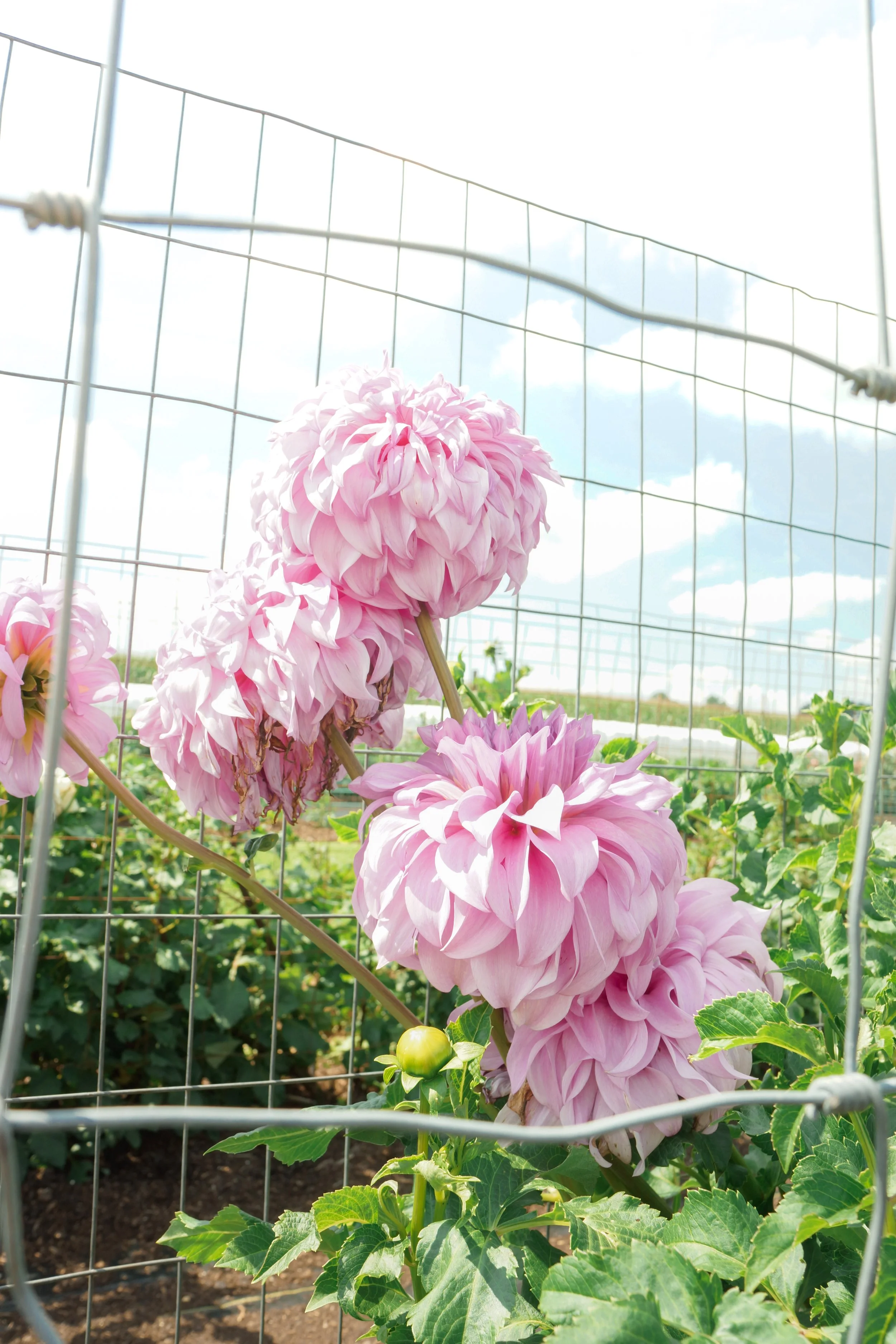
Our conversation extended well beyond the flowers I would be taking home for the wedding. As we walked the rows, I was particularly intrigued by the delicate balance between loss prevention and economic viability that shapes many of Clyde’s decisions on the farm.
When I asked about some of the biggest challenges involved in dahlia farming, one of the first things he mentioned was wind. Dahlias are top-heavy, and their stems can easily snap during high winds. Rather than individually staking each plant, Clyde grows them between wire cattle panels, providing support without the expensive labor hours that individual staking would require.
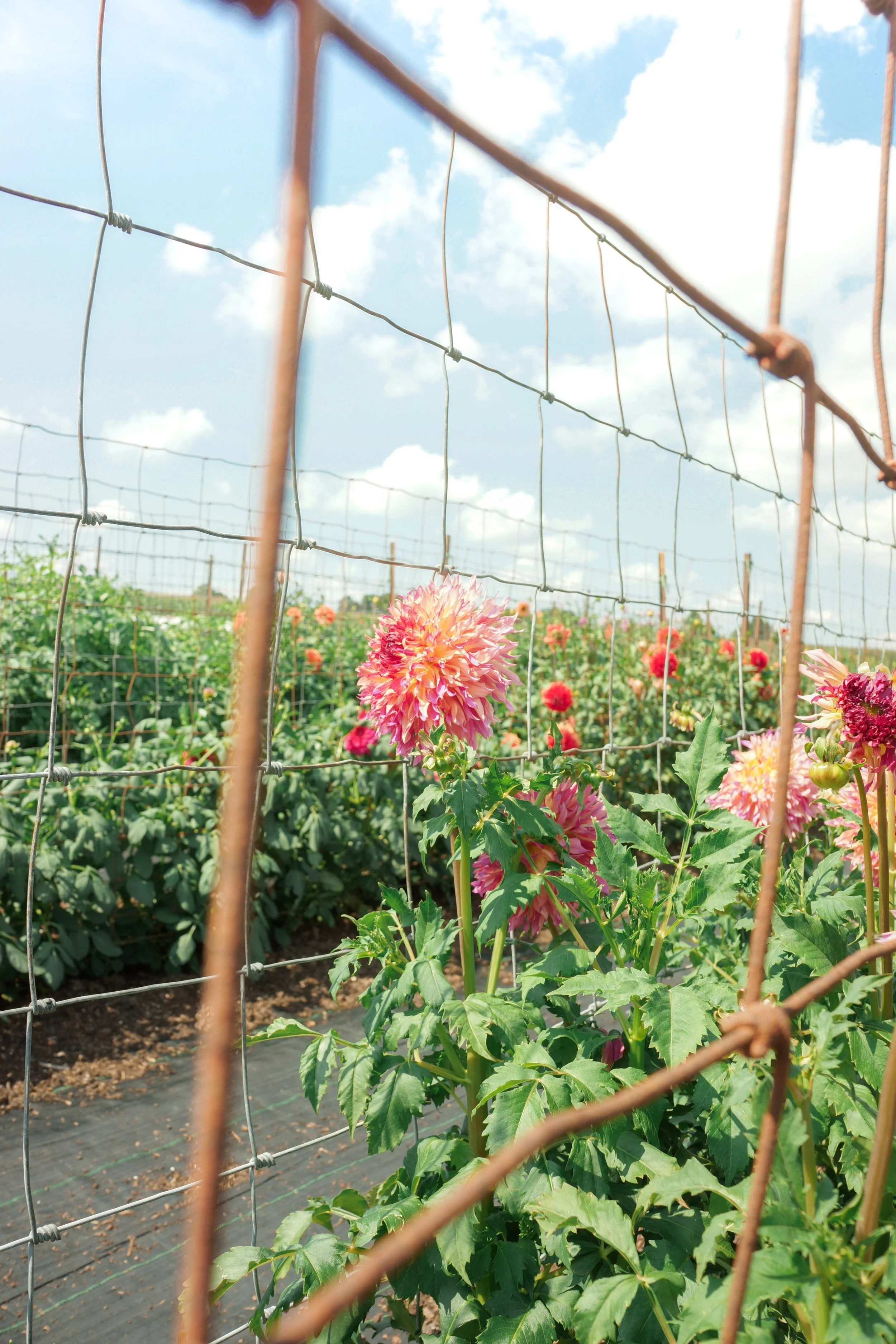
That same balance comes into play when growing for orders that need flowers at a specific time. Because dahlia bloom times are heavily influenced by environmental conditions, Clyde plants multiple successions to increase the likelihood that enough flowers will be ready when they’re needed. It reduces the risk of coming up short but creates another challenge: finding sales outlets for all of the excess blooms.
Purchasing flowers directly from farms like the Peters’ keeps more of our spending within the local agricultural economy, supports the people maintaining working farmland in our communities, and reduces the distance flowers travel to reach us. Perhaps most importantly, though, it provides a unique opportunity to learn from the decades of knowledge and experience growers like Clyde have accumulated.
Sincerely,
The Grower